Do this first
Locate the house valve
Know where water enters and that the valve turns, so you can close it fast if water escapes.

Repiping service
You have patched a leak, then another, and now the water runs brown and the shower has lost its push. Call to find out whether whole-house repiping, replacing every supply line in your Woodstock home, is the sensible next step.
Few people set out to repipe. They set out to fix a leak. A bad section gets cut out, the water behaves for a while, and then a damp patch appears in another room or the ceiling under the upstairs bathroom picks up a stain.
That loop is the clearest sign the trouble may be the whole run rather than one pipe, and it is usually the moment whole-house repiping comes up. Pipes of the same age and material, carrying the same water, can wear at a similar pace, so fixing the first weak spot only shows you where the next one could be.
Other signs travel with it: water that comes out tinted after sitting overnight, a shower and dishwasher that cannot run together, green crust at fittings under the sink, a gray plastic pipe stamped PB near the water heater. None proves anything alone, but three or four together make the conversation worth having. If you have had exactly one leak and everything else is fine, say so on the call; the honest answer may be a repair.
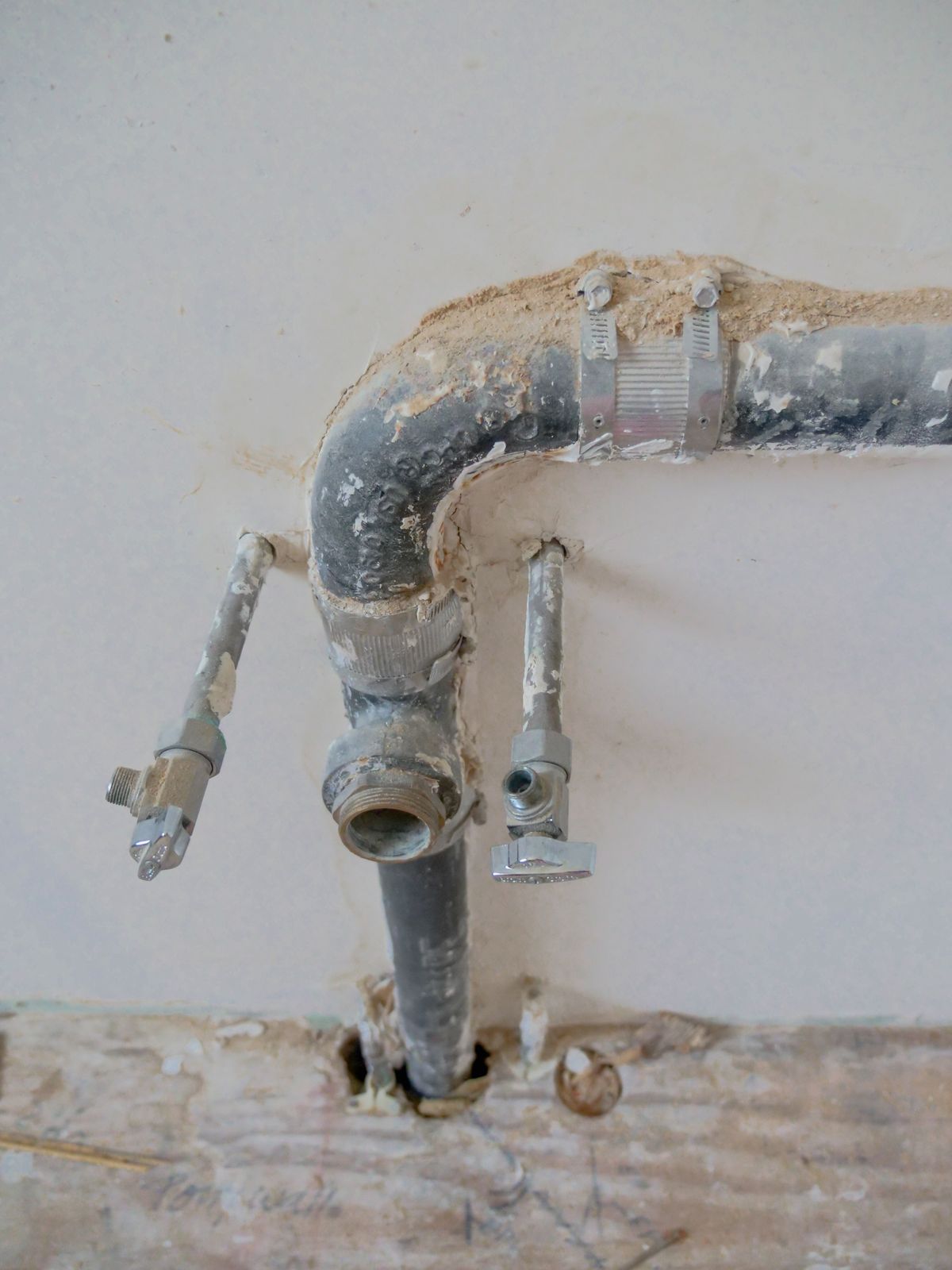
Whole-house repiping replaces the water supply piping: the pressurized lines running from where water enters the house to every sink, tub, shower, toilet, washer and ice maker. That includes the branch lines and the small shut-off valves under sinks and behind toilets, which can be stiff and prone to weeping.
It does not replace drains, vents or the sewer, which are a separate system with their own specialists. The water heater tank is not part of it either, though the technician reconnects it. If you suspect trouble in the underground line from the street, mention it on the call and the technician can point you the right way.
Settle a few items before work starts: whether outdoor spigots are included, where the main valve will sit afterward, and what happens to the old pipe once it is out.
Before any whole-house repiping starts, the technician looks at how the house is built and picks a short, low-disruption path. With an accessible attic, main lines can run overhead and drop through interior walls to each fixture. A basement or crawlspace offers the reverse: lines travel along the joists and rise into the walls above.
Slab-on-grade houses are the hard case, because original lines may sit under concrete. One answer is a reroute, bringing new lines through the attic or walls instead of breaking the floor. Partial repiping and reroutes explains how that option works. A good plan names every opening ahead of time: where it goes, how big it is and whether it lands behind a closet door or in a freshly painted hallway.
Whole-house repiping is staged so you know ahead of time when the water goes off. Many homes take a few days, and the technician lays out the schedule for yours before anything starts.
A little preparation makes those days easier. Three steps help most:
Do this first
Know where water enters and that the valve turns, so you can close it fast if water escapes.
Shots under sinks, at the water heater, and in the garage, basement or attic help the phone conversation.
Lift valuables and rugs out of the way and set towels or a bucket under any drip.
Note which fixtures run weak, which tint the water, and when it happens.
On a whole-house repiping job, the technician can explain when new lines are tested and when walls are patched, so you know the order of work before it starts. Whether the work needs a permit or inspection depends on the home and the job; the technician can explain what applies to your home.
Patching is coordinated as part of the job, and openings are placed where they hide easily, in closets, attic floors and behind fixtures. Ask before work begins whether the drywall repair is sanded and ready for paint, and who handles the painting, because finish work is where expectations tend to differ. Afterward, run through the house with the technician and have the new valve locations pointed out.
For whole-house repiping, Towne Lake, in 30189, is the largest local picture. It went up from the late 1980s into the 1990s. Many of its roughly 5,700 homes date from years when gray polybutylene was in use, alongside copper, and basements are common there, so lines can run overhead along joists. Golf communities such as Towne Lake Hills sit inside that same area. If you have gray plastic pipe, polybutylene replacement explains how to identify it.
Around the historic downtown and the 1879 depot area, ZIP 30188, older houses may carry galvanized steel in places and a patchwork from past remodels. New townhome construction is going up nearby, and its needs differ from an older house. Newer subdivisions lie toward Arnold Mill Road in east Woodstock, and whole-house repiping there may follow one specific failure rather than the age of the whole system.
Summers are hot and humid, red clay soil is the norm and a hard freeze turns up only occasionally.
Whole-house repiping can use either of two main materials, both in everyday use. PEX is flexible, can need fewer wall openings and suits houses where access is the main difficulty. Copper is rigid and familiar, with more joints and more work at each turn. Neither suits every house; press for the reason behind the recommendation and what the alternative would change in routing and openings.
Before anyone starts, hear the scope, the route and the schedule for your whole-house repiping. Calls are answered around the clock, and the dispatcher connects you with a technician who knows Woodstock homes.
The deciding factor is the pattern, not any single symptom. One leak in an otherwise healthy system is a repair. A second or third leak in different rooms, combined with discolored water or weak pressure, points toward the system wearing out. Gray polybutylene is another reason many owners choose to replace everything. The technician asks about your history, the age of the house and what you can see, then explains which side you fall on.
House size, route and wall access change the answer, so the schedule is set after the technician sees your home, and water being off at certain points is expected. The work is staged, and each stage affects your water differently. Ask for that plan before the first day, so you know when to fill containers, when laundry and showers are possible, and whether anyone at home depends on running water.
No. The goal is the fewest and smallest openings that allow a clean route. Attic access, basements and crawlspaces carry much of the work, and flexible pipe can be fished through walls from a few points. Slab homes are the trickiest case, where lines may be rerouted overhead instead of breaking concrete. You should hear where each opening will go, and roughly how large, before the work starts.
Patching of the access openings is coordinated as part of the job, but the exact scope varies, so raise it before the schedule is set. Find out whether the repair stops at filled-and-sanded drywall or includes texture and paint, and who handles each stage. A clear answer up front avoids the surprise of finishing the plumbing and finding bare, unpainted patches. Ask about any workmanship guarantee the contractor offers on completed work.
It depends on the home and the job, and permit questions belong with the technician. The technician can explain what applies to your home and whether an inspection is part of the process. Bring it up when you get the plan, because it can affect scheduling. If an inspection is involved, find out what happens on that day and whether someone needs to be home.
It can improve how water flows, but it is not a pressure upgrade by itself. Older steel and heavily scaled pipes restrict flow, so replacing them can help fixtures that have faded over the years. The pressure at the street and any regulator on your line are separate factors. Describe which fixtures are weak and when it started, and the technician will explain what a repipe is likely to change and what it will not.
Yes, plenty of households stay put, though it takes some patience. Expect noise, dust, workers moving through and stretches with no running water. Some households choose to stay elsewhere for a night or two, particularly with infants, health needs or work-from-home calls that cannot be interrupted. Request the day-by-day plan before you decide. Filling water containers beforehand and clearing paths to the attic hatch and water heater makes staying far more comfortable.
The plan normally includes new shut-off valves at the fixtures, such as under sinks and behind toilets, since old ones can be stiff or weepy. It is worth confirming this in the scope, along with hose bibbs and the valve where water enters the house. Knowing where each valve sits lets you stop water to one fixture without shutting down the whole home, so have each one pointed out at the end.
Request the full scope of the whole-house repiping in plain words, including valves, hose bibbs and the water heater connection. Find out where the openings go, when water will be off each day, and who patches and paints. Also ask what happens to the old pipe, and have the new valves pointed out at the end. Clear, detailed answers at this stage make the rest of the job easier to follow.
Tell the dispatcher what the house is doing and when it was built. If a repipe looks sensible, a local technician is lined up and the options and the plan are explained before any work begins.
Call and describe your leakServing Woodstock, GA: ZIP codes 30188 and 30189